Top 10 Uses of Text to Speech in 2026
Text to speech technology has grown from a niche accessibility tool into a mainstream solution used by millions of people around the world. In 2025, the applications of TTS are broader and more practical than ever before. Whether you are a student, a content creator, or a busy professional, there is a good chance that text to speech can make your life easier.
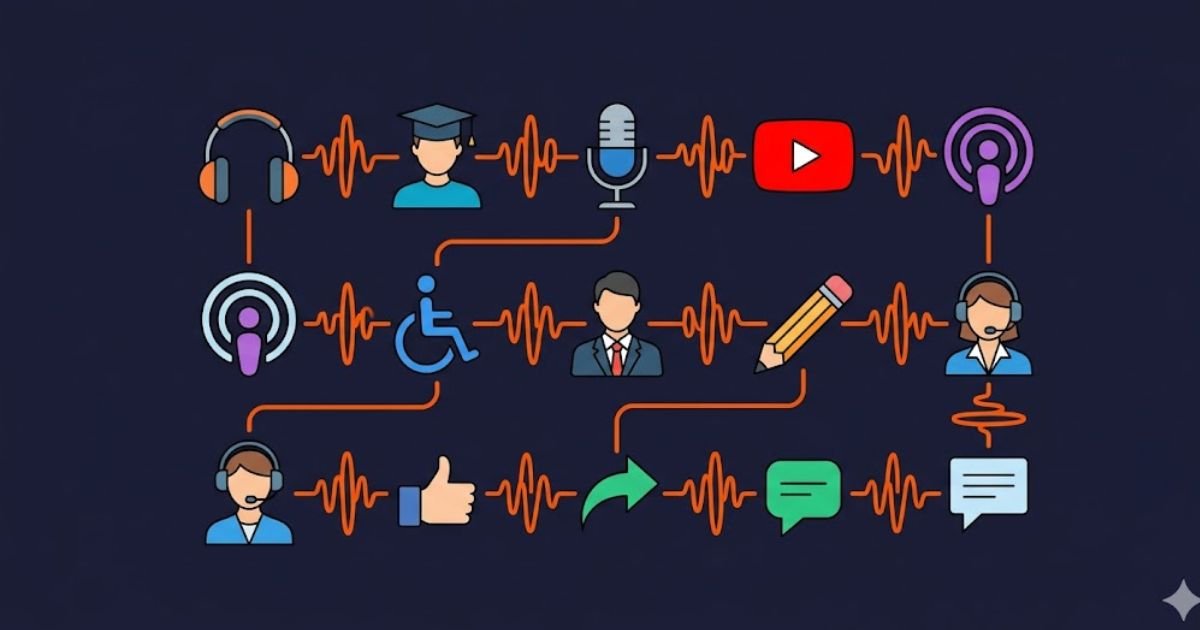
Here are the top 10 uses of text to speech technology in 2025.
1. Accessibility for People with Visual Impairments
One of the most important uses of TTS technology is helping people with visual impairments access written content. Screen readers powered by TTS allow blind and low-vision users to navigate websites, read documents, and consume digital content independently. This use case remains one of the most impactful applications of the technology.
2. Support for People with Dyslexia
Dyslexia affects millions of people worldwide, making reading a challenging and exhausting experience. Text to speech tools allow people with dyslexia to listen to written content instead of reading it, significantly reducing cognitive load and improving comprehension. TTS has become an essential learning aid in schools and workplaces alike.
3. Language Learning and Pronunciation Practice
Language learners use TTS tools to hear correct pronunciation in their target language. Listening to native-like AI voices helps learners develop their ear for the language and improve their speaking skills. TTSVerse supports over 100 languages, making it an excellent companion for language study.
4. Voiceovers for YouTube Videos
Content creators increasingly use AI voices to narrate their YouTube videos, tutorials, and explainer content. TTS eliminates the need for expensive recording equipment or professional voice actors, making video production accessible to anyone with a script and an internet connection.
5. Podcast Production
Podcasters use text to speech technology to produce episodes quickly and consistently. Whether it is a news recap, a daily briefing, or an educational series, AI-generated voices can deliver content professionally without the need for a recording studio.
6. E-Learning and Online Education
Educational platforms and online course creators use TTS to add audio narration to their content. Students retain information better when they can both read and listen simultaneously. TTS makes it easy to create accessible, engaging learning materials at scale.
7. Productivity and Multitasking
Busy professionals use TTS to stay productive while on the move. Instead of reading long emails, reports, or articles, they listen to them during their commute, workout, or lunch break. Listening to content is often faster and less mentally demanding than reading it on a screen.
8. Proofreading and Editing
Writers and editors use TTS as a proofreading tool. Hearing your own writing read aloud helps you catch errors, awkward phrasing, and inconsistencies that are easy to miss when reading silently. Many professional writers swear by this technique.
9. Customer Service and IVR Systems
Businesses use TTS technology to power interactive voice response (IVR) systems, chatbots, and automated customer service tools. AI voices can handle routine customer interactions efficiently, reducing the workload on human support teams.
10. Social Media and Short-Form Content
TTS has become a popular tool for creating short-form audio content for social media platforms. Creators use AI voices to narrate Instagram reels, TikTok videos, and YouTube Shorts, allowing them to produce content faster and at higher volume.
How to Get Started with Text to Speech for Free
All of these use cases are within reach — and you do not need to spend a single penny to get started. TTSVerse offers a completely free text to speech tool that supports over 100 languages and dozens of natural-sounding AI voices. Simply visit the site, type or paste your text, choose your voice, and hit play. You can also download the result as an MP3 file to use anywhere you like.
Final Thoughts
Text to speech technology is no longer just for accessibility. In 2025, it is a versatile tool that serves students, creators, professionals, and businesses in countless ways. As AI voice technology continues to improve, the range of applications will only grow.
Ready to explore what TTS can do for you? Visit TTSVerse — Free Text to Speech Online and start converting text to audio today. No signup required.
Try TTSVerse for Free!
Convert any text to natural-sounding audio in seconds. No signup required.
Start Converting →