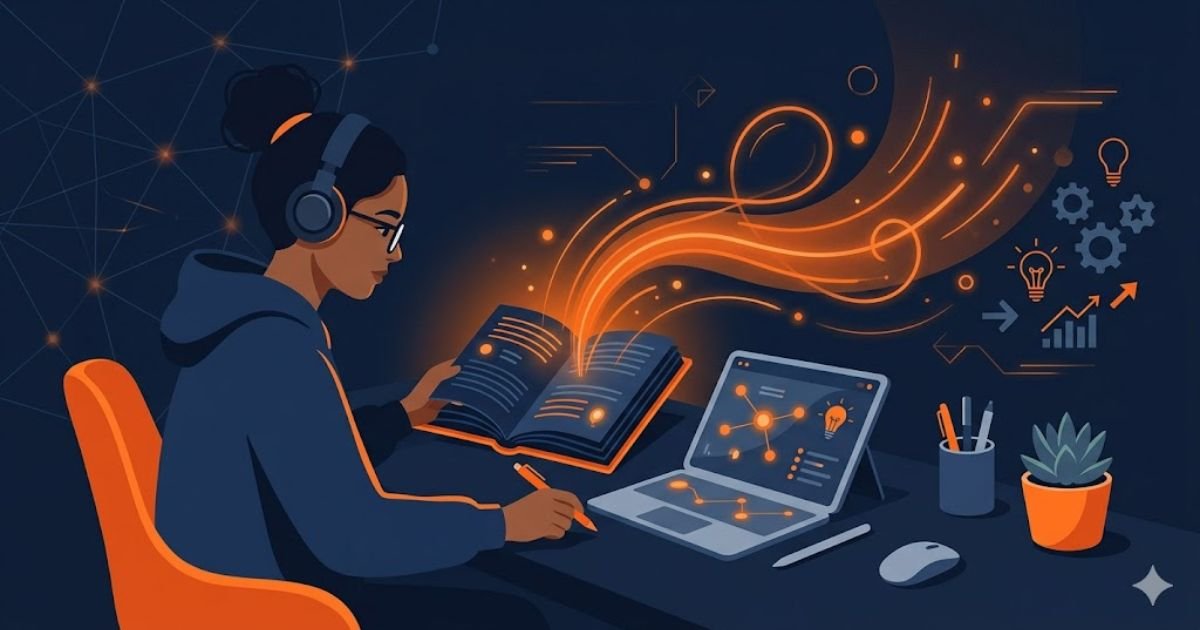
Text to Speech for Students — Study Smarter Not Harder
Studying is hard work. Between long reading lists, dense textbooks, and hours of note-taking, students are constantly looking for smarter ways to absorb and retain information. Text to speech technology has emerged as one of the most effective — and underused — study tools available to students today.
In this article, we explore how students can use TTS technology to study smarter, improve comprehension, and get more out of every study session.
What is Text to Speech and How Does it Help Students?
Text to speech (TTS) technology converts written text into spoken audio. For students, this means being able to listen to their notes, textbooks, articles, and study materials instead of — or alongside — reading them.
Research consistently shows that combining reading with listening significantly improves information retention and comprehension. When you hear content read aloud while following along with the text, your brain processes the information through two channels simultaneously, making it more likely to stick.
Key Benefits of TTS for Students
Improved Comprehension
Listening to content read aloud helps students understand complex material more easily. Hearing the correct pronunciation of technical terms, proper nouns, and subject-specific vocabulary reinforces understanding in a way that silent reading alone cannot.
Better Information Retention
Studies have shown that people retain more information when they engage with content through multiple senses. Combining reading and listening activates more areas of the brain, leading to stronger memory formation and better recall during exams.
Support for Dyslexia and Reading Difficulties
For students with dyslexia, ADHD, or other reading difficulties, TTS technology is genuinely life-changing. It removes the barriers that make traditional reading exhausting and allows these students to access the same content as their peers on equal terms.
Multitasking and Flexibility
TTS allows students to study while doing other things — commuting, exercising, cooking, or doing household chores. Converting study notes to MP3 files means you can keep learning even when you are away from your desk.
Reduced Eye Strain
Spending hours staring at a screen or textbook is exhausting. Listening to your study material gives your eyes a break while keeping your brain actively engaged with the content.
How Students Can Use TTSVerse
Convert Lecture Notes to Audio
After each lecture, copy your notes into TTSVerse and convert them to audio. Listen back during your commute or before bed to reinforce what you learned in class.
Listen to Textbook Chapters
Copy sections of your textbook or reading materials into TTSVerse and listen while following along with the text. This dual-channel approach significantly boosts comprehension and retention.
Proofread Essays by Ear
One of the best ways to proofread your essays is to listen to them read aloud. Errors, awkward phrasing, and unclear sentences become immediately obvious when you hear them spoken. Paste your essay into TTSVerse and listen back before submitting.
Practice Language Pronunciation
If you are studying a foreign language, TTSVerse is an excellent pronunciation guide. Type words, phrases, or sentences in your target language and listen to how they should be pronounced by a native-like AI voice.
Create Audio Study Guides
Before an exam, compile your key notes and revision points into a document, convert it to audio using TTSVerse, and download the MP3. Listen to your study guide repeatedly to reinforce the information before exam day.
Tips for Students Using TTS
Follow along while listening
For best results, read the text on screen while listening to the audio. This dual-channel approach maximizes comprehension and retention.
Use a slower speed for complex material
For dense or technical content, reduce the playback speed in TTSVerse so you have more time to process each sentence before moving on.
Take breaks
Even with TTS, your brain needs regular breaks to consolidate information. Study in focused sessions of 25 to 30 minutes with short breaks in between.
Combine with active recall
After listening to a section, pause and try to recall the key points from memory. This active recall technique dramatically improves long-term retention.
Study Smarter with TTSVerse
Text to speech technology is one of the most powerful and accessible study tools available to students today — and with TTSVerse, it is completely free. No signup, no downloads, no cost.
Visit TTSVerse — Free Text to Speech Online today and discover how listening can transform the way you study. Your next exam result might just thank you for it.
Try TTSVerse for Free!
Convert any text to natural-sounding audio in seconds. No signup required.
Start Converting →